Good Food Should Taste Good: What Healthy Eating Really Looks Like (Without the Boring Part)
What makes good food good? Learn how nutritious meals support your health, why taste drives consistency, and how to eat well without eating boring.
Quick answer
Good food is food that nourishes your body and that you genuinely enjoy eating. It’s built mostly on minimally processed whole foods — quality protein, fruits and vegetables, smart carbs like whole grains and rice, and healthy fats — prepared so it tastes good enough to eat consistently. Taste matters because the healthiest way of eating is the one you can actually stick with.
Somewhere along the way, “good food” and “food that tastes good” got split into two different teams. One team is dry chicken, plain rice, and steamed broccoli eaten cold out of a container at your desk. The other team is everything you actually want to eat. Most people spend years bouncing between the two: locked in for two weeks, then off the rails for a month.
Here’s the thing. That split is fake. Good food is supposed to taste good — not as a reward, not as a cheat meal, but as the whole point. When your meals are both nourishing and genuinely enjoyable, you stop needing willpower to eat well. You just eat well, because you want to.
Let’s break down what good food really is, how it supports your health, and why flavor might be the most underrated nutrition tool you’ve got.
What Is Good Food?
Good food does two jobs at once: it fuels your body, and it makes you want to come back for more. Nutritionally, that means meals built mostly from minimally processed whole foods — quality protein, fruits and vegetables, smart carbohydrates, and healthy fats. Practically, it means food you can afford, prep, and enjoy often enough that it becomes your normal.
That second half matters more than most nutrition advice admits. A “perfect” meal plan you abandon by Thursday isn’t good food. A balanced plate you’re genuinely excited to eat every day is.
Official guidance has been moving in the same real-food direction. The 2025–2030 Dietary Guidelines for Americans, released by USDA and HHS on January 7, 2026, put quality protein at the center of every meal, push whole fruits and vegetables, favor whole grains over refined carbs, encourage fats from whole foods like eggs, seafood, nuts, olives, and avocados, and call for limiting highly processed foods and added sugars. Strip away the policy language and it sounds a lot like what the gym crowd has been saying for years: eat real food, get your protein in, and don’t drown it in sugar.
How Good Food Supports Your Overall Health
Every part of a balanced plate has a job to do.
Protein builds and repairs muscle, keeps you fuller for longer, and is the nutrient most people who train hard try to hit first. Lean meats, eggs, fish, dairy, Greek yogurt, and beans all pull their weight here.
Smart carbs are your energy. Rice, potatoes, fruit, and whole grains refill the glycogen your muscles burn during training and keep your brain sharp. Carbs aren’t the enemy. The bowl of rice after leg day isn’t your problem — a steady stream of sugar-loaded, refined snacks is.
Healthy fats support hormone production and help your body absorb vitamins A, D, E, and K. Think avocado, olive oil, nuts, seeds, and fatty fish like salmon.
Fruits and vegetables bring fiber, vitamins, minerals, and plant compounds that support digestion, heart health, and recovery.
The long game is where this pays off. Eating patterns built on these foods are associated with a lower risk of chronic conditions like heart disease, type 2 diabetes, and obesity, which is exactly why national dietary guidance is built around them. But here’s the catch: none of those benefits show up from a diet you only follow for ten days.
Why Taste Is the Real Key to Eating Healthy
Taste isn’t a side note in nutrition. It’s the main driver of what people actually eat. In the International Food Information Council’s 2026 Food & Health Survey, 88% of Americans said taste drives their food and beverage purchases — still the number-one factor, ahead of price, convenience, and healthfulness.
And consistency is what produces results. In a well-known 2005 randomized trial published in JAMA comparing the Atkins, Zone, Weight Watchers, and Ornish diets, weight loss tracked with how well people stuck to their plan — not which plan they were on. The most common reasons people quit? The diet was too hard to follow, or it wasn’t delivering results fast enough.
Put those two facts together and the conclusion is pretty simple. If your healthy food tastes like punishment, you won’t eat it long enough for it to work. Flavor isn’t the opposite of discipline. Flavor is what makes discipline easy.
The Science of Making Healthy Food Taste Better
Researchers have actually put this to the test. At Stanford, psychologists Bradley Turnwald and Alia Crum ran a study across five university dining halls, covering roughly 138,000 diner decisions. The only thing they changed was how vegetable dishes were labeled. When vegetables got flavor-forward names that highlighted ingredients and cooking methods, diners chose them 29% more often than when the same dishes carried health-focused labels — and ate 39% more of them.
But here’s the part that matters most for your kitchen: the approach only worked when the food lived up to the hype. At a dining hall that served blander preparations like plain boiled carrots, tasty-sounding names didn’t move the needle. You can’t market your way out of boring food. It has to genuinely taste good.
A separate proof-of-concept study from Penn State, published in 2023 in the Journal of the Academy of Nutrition and Dietetics, took ten popular American dishes, cut back the saturated fat, sugar, and salt, then added herbs and spices like garlic powder, onion powder, paprika, and cayenne. In blind taste tests, the flavor-boosted healthier versions were liked as much as — or more than — the originals in seven out of ten recipes.
The lesson: when you lighten a meal up, flavor is what keeps it from feeling like a sacrifice. Seasonings, sauces, and smart pairings aren’t extras. They’re the bridge between knowing what to eat and actually eating it.
How The Flavor Gang Makes Good Food Taste Good
This is the whole reason The Flavor Gang exists. We started in a tiny kitchen with one stubborn belief: healthy food shouldn’t taste like punishment. Everything we make is handcrafted in small batches in Texas and built to make macro-friendly eating something you actually look forward to.
Bowl O’ Gainz: Breakfast That Tastes Like Dessert
Bowl O’ Gainz (BOGz, to the Gang) is a rice-based hot cereal that brings the carbs to power your morning or fuel your training, in flavors like Pumpkin Spice, Cream Pie, Birthday Cake, and Peaches & Cream. Cook it hot like oatmeal and top it with fruit or nut butter, whisk in egg whites or a scoop of protein powder to round out your macros, or turn it into protein pancakes, waffles, and baked meal-prep treats. It’s the easiest way we know to make a smart-carb breakfast feel like a treat instead of a chore.
TFG Sauces: The Cure for “Chicken and Rice Again”
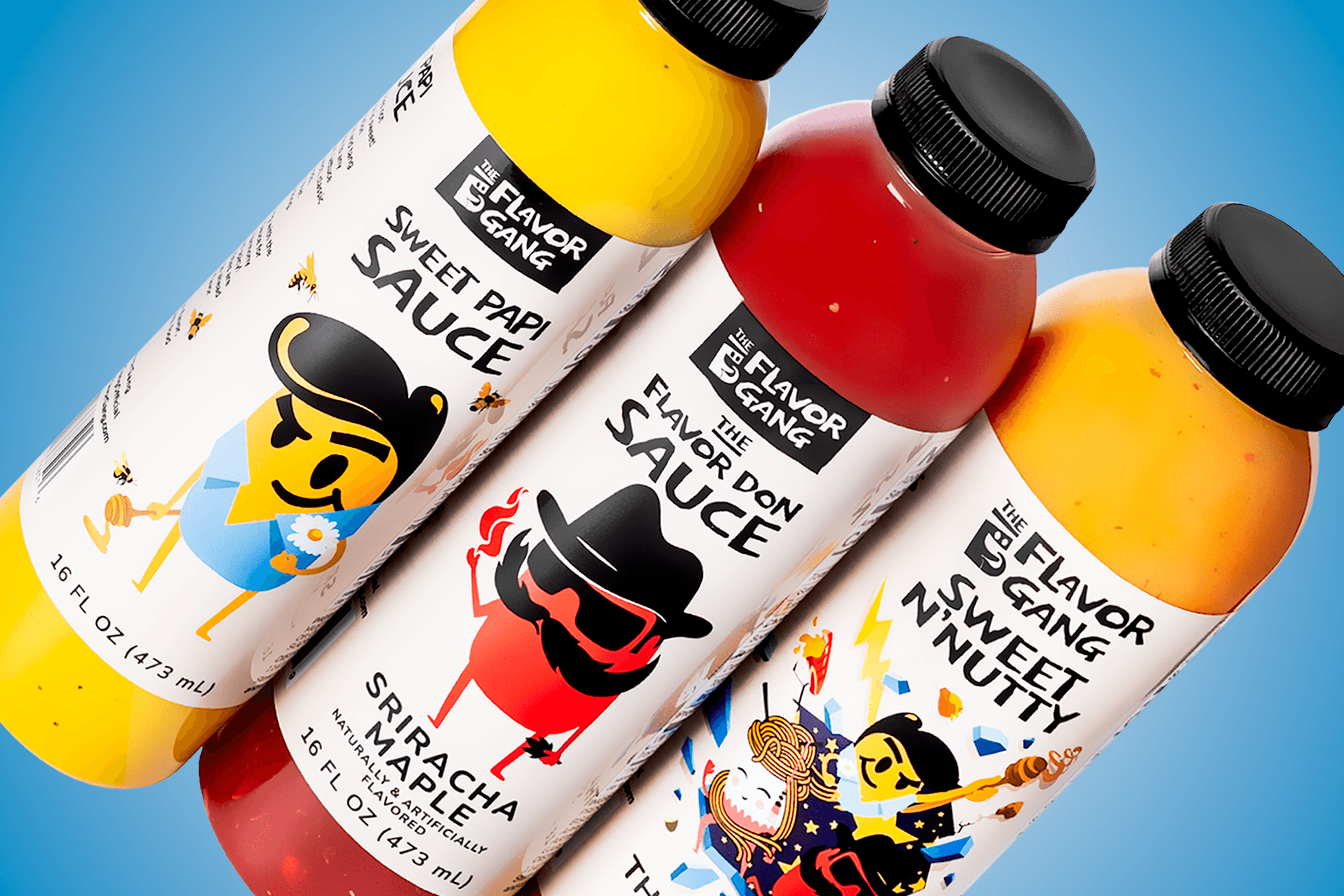
Our sauces are low-calorie flavor bombs built for meal prep and for people who eat chicken six days a week. Sweet Papi brings a sweet, honey-mustard-style kick that turns a plain chicken-and-rice bowl into something you crave. Flavor Don layers sriracha heat with maple sweetness. Take-Out Sauce gives you that stir-fry flavor at home without the delivery fee, and Thai Sweet-N-Nutty adds a sweet, nutty, Thai-inspired twist to bowls and wraps. Same macro-friendly meal, completely different experience.
TFG Seasonings: Shake It On, Wake It Up
Mostacho Spice is a smoky, handcrafted blend of chili, garlic, and paprika that works as a dry rub on steak or chicken — or even sprinkled over a savory bowl when you want extra kick. Smokin’ Tex brings smoky, peppery, backyard-grill flavor to eggs, roasted vegetables, and chicken. Flavor House rounds out the lineup for everyday cooking. A good seasoning is the cheapest upgrade in any kitchen, and exactly the kind of flavor-first move the research backs up.
None of these replace the real food on your plate. They make the real food on your plate worth eating — again and again.
What a Day of Good Food Can Look Like
Start the morning with a warm bowl of Pumpkin Spice Bowl O’ Gainz cooked with egg whites for protein, topped with sliced banana and a spoonful of almond butter. For lunch, grab your meal-prep chicken, jasmine rice, and roasted green beans, and finish the whole thing with a drizzle of Sweet Papi. At dinner, rub a sirloin with Mostacho Spice, pair it with a baked potato, and toss broccoli and bell peppers in Smokin’ Tex before they hit the oven — or skip the steak and throw together a quick chicken and veggie stir-fry with Take-Out Sauce. Need a snack? Greek yogurt and berries never miss.
Look closely and it’s the same protein, smart carbs, healthy fats, and produce you’d find in any solid nutrition plan. The difference is you’ll actually want to eat it again tomorrow. That’s what good food looks like.

Written by Yana Capa-Pasco
Marketing Director